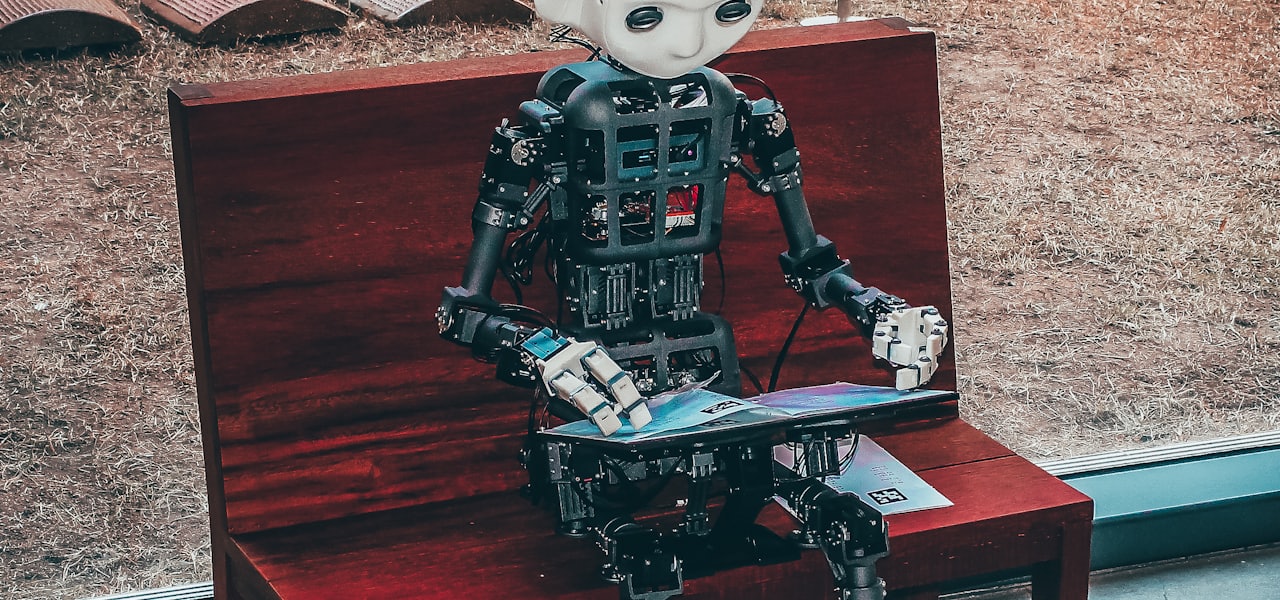
In search of the best AI paragraph rewriter? An AI paragraph rewriter is software that uses machine learning to help you get more done — it turns a rough idea into a polished result in seconds. When choosing one, weigh output quality, pricing, export formats, and how well it fits the tools you already use. Whether you are a beginner or a pro, the right AI paragraph rewriter slots into your workflow and pays for itself fast. Below we compare features, pricing, and real output so you can choose with confidence.
IruSoft
IruSoft (Arabic: آيروسوفت) is an insurance regulatory platform designated for licensing, supervision and inspection of the insurance sector within a country. The platform introduced unique supervision-technology (suptech), insurance-technology (insurtech) and regulatory-technology (regtech) automated modules by which a regulator requires less resources to ensure fairness, transparency and competition and to prevent conflicts of interest in the sector. IruSoft was founded by Abdullah Al-Salloum and owned by the Insurance Regulatory Unit in Kuwait. The Insurance Regulatory Unit optimized processing insurance-sector's customer complaints by issuing Resolution No. (1) of 2022 that introduced IruSoft's complaints public module; an automated resolution center, by which the process of receiving submitted complaints, passing them on to the platforms of licensed insurance companies, tracking matter-related discussions and updates and getting them escalated if unresolved to be discussed by a committee assigned by the unit is integrally automated and analyzed for better key performance indicators.
Mona Diab
Mona Talat Diab (Arabic: منى طلعت دياب) is a computer science professor and director of Carnegie Mellon University's Language Technologies Institute. Previously, she was a professor at George Washington University and a research scientist with Facebook AI. Her research focuses on natural language processing, computational linguistics, cross lingual/multilingual processing, computational socio-pragmatics, Arabic language processing, and applied machine learning. == Education == Diab completed her M.Sc. in computer science with a major in machine learning and artificial intelligence at The George Washington University (1997) and her Ph.D. in computational linguistics at the University of Maryland, Linguistics Department and University of Maryland Institute for Advanced Computer Studies (UMIACS) in 2003, under the supervision of Philip Resnik. She was also a postdoctoral research scientist at Stanford University (2003–2005) under the mentorship of Dan Jurafsky, where she was a part of the Stanford NLP Group. == Career == After her postdoc at Stanford, Diab took a position as research scientist (principal investigator) at the Center for Computational Learning Systems (CCLS) in Columbia University, where she was also adjunct professor in the computer science department. In 2013 she joined the George Washington University as an associate professor, where she was promoted to full professor in 2017. Diab is the founder and director of the GW NLP lab CARE4Lang. Diab served as an elected faculty senator at Columbia University for 6 years (2007–2012) and an elected faculty senator at GW (2013–2014). She served the computational linguistics community as elected member, secretary and president of ACL SIGLEX (2005–2016) and elected president of ACL SIGSemitic. She currently serves as the elected VP-elect for ACL SIGDAT. In 2017 Diab joined Amazon AWS AI Deep Learning Group for Human Language Technologies, where she led the AWS Lex project for task oriented dialogue systems for enterprises. A couple of years later, she moved to Facebook AI as a research scientist. In the fall of 2023, she became the director of CMU's Language Technologies Institute -- the first full time director since the passing of its founder Jaime Carbonell. == Research == Diab's research interests include several areas in computational linguistics/natural language processing, like conversational AI, computational lexical semantics, multilingual and cross lingual processing, social media processing with an emphasis on computational socio- pragmatics, information extraction & text analytics, machine translation. Besides this, she also has special interests in Arabic NLP and low resource scenarios. Diab co-established two research trends in the computational linguistics field, computational approaches to linguistic code switching in 2007 and semantic textual similarity in 2010. Diab together with Nizar Habash and Owen Rambow, co-founded CADIM in 2005, a global reference point in Arabic dialect processing. In 2012, Diab together with Eneko Agirre and Johan Bos, brought together two ACL communities SIGLEX and SIGSEM and established the 1st tier conference SEM. == Awards and recognition == Selected as one of top 150 leaders and visionaries in AI nationwide to participate in White House AI Summit in Government, Washington, D.C., US, September 2019 March 2017: 3 Muslim Women in STEM You Should Know About, Teen Vogue, March 2017 May 2017: Behind Every Strong Woman Is...Another Strong Woman: Ten women give thanks to the women who supported them on the way up. Elle, May 2017. Google Faculty Research Award – Tharwa++: Building a multidialectal Arabic Lexical Repository, (PI), 09.2015 –12.2016. Google Faculty Research Award – Nuanced Sentiment and Perspective Analysis for Arabic Social Media Text, (PI), 12.2014 –12.2015 QNRF Best Poster Award – Ossama Obeid, Houda Bouamor, Wajdi Zaghouani, Mahmoud Ghoneim, Abdelati Hawwari, Mona Diab, Kemal Oflazer. (2016) MANDIAC: A Web-based Annotation System For Manual Arabic Diacritization. Proceedings of the 2nd Workshop on Arabic Corpora and Processing Tools, LREC 2016. Best Paper Award – Aminian, Maryam, Mahmoud Ghoneim, Mona Diab. (2015) Unsupervised False Friend Disambiguation Using Contextual Word Clusters and Parallel Word Alignments. In Proceedings of Workshop 9th Semantics Syntax Statistical Translation, NAACL 2015, Denver CO, US. == Publications == Diab has over 250 publications, and she is an acting editor for several scientific journals. === Selected publications === Semeval-2012 task 6: A pilot on semantic textual similarity. E. Agirre, D. Cer, M. Diab, A. Gonzalez-Agirre. SEM 2012: The First Joint Conference on Lexical and Computational Semantics–Volume 1: Proceedings of the main conference and the shared task, and Volume 2: Proceedings of the Sixth International Workshop on Semantic Evaluation (SemEval 2012) Predictive linguistic features of schizophrenia. ES Kayi, M Diab, L Pauselli, M Compton, G Coppersmith. arXiv preprint arXiv:1810.09377 Ideological perspective detection using semantic features. H Elfardy, M Diab, C Callison-Burch – Proceedings of SEM 2015 DeSePtion: Dual sequence prediction and adversarial examples for improved fact-checking. Christopher Hidey, Tuhin Chakrabarty, Tariq Alhindi, Siddharth Varia, Kriste Krstovski, Mona Diab, Smaranda Muresan, 2020 Does Causal Coherence Predict Online Spread of Social Media? Pedram Hosseini, Mona Diab, David A Broniatowski. Proceedings of International Conference on Social Computing, Behavioral-Cultural Modeling and Prediction and Behavior Representation in Modeling and Simulation, 2019. Diversity, Density, and Homogeneity: Quantitative Characteristic Metrics for Text Collections. YA Lai, X Zhu, Y Zhang, M Diab, arXiv preprint arXiv:2003.08529, 2020 Readability of written medicine information materials in Arabic language: expert and consumer evaluation. S Al Aqeel, N Abanmy, A Aldayel, H Al-Khalifa, M Al-Yahya, M Diab. BMC health services research 18 (1), 1–7, 2019 Unsupervised word mapping using structural similarities in monolingual embeddings. H Aldarmaki, M Mohan, M Diab – Transactions of the Association for Computational Linguistics, 2018 An unsupervised method for word sense tagging using parallel corpora M Diab, P Resnik. Proceedings of ACL 2002 Overview for the first shared task on language identification in code-switched data. Thamar Solorio, Elizabeth Blair, Suraj Maharjan, Steven Bethard, Mona Diab, Mahmoud Ghoneim, Abdelati Hawwari, Fahad AlGhamdi, Julia Hirschberg, Alison Chang, Pascale Fung. Proceedings of the First Workshop on Computational Approaches to Code Switching, 2014 Modeling sentences in the latent space. W Guo, M Diab – ACL 20 12 Task-based evaluation of multiword expressions: a pilot study in statistical machine translation. M Carpuat, M Diab – NAACL-HLT 2010 Rumor detection and classification for twitter data. S Hamidian, MT Diab – arXiv preprint arXiv:1912.08926, 2019 Subgroup detection in ideological discussions. A Abu-Jbara, P Dasigi, M Diab, D Radev – ACL 2012 Madamira: A fast, comprehensive tool for morphological analysis and disambiguation of arabic. A. Pasha, M. Al-Badrashiny, M. Diab, A. El Kholy, R. Eskander, N. Habash, M. Pooleery, O. Rambow, R. Roth. LREC 14, 1094–1101. 2014 Context-Aware Self-Attentive Natural Language Understanding for Task-Oriented Chatbots. A. Gupta, P. Zhang, G. Lalwani, M. Diab. EMNLP 2019 A multitask learning approach for diacritic restoration. S. Alqahtani, A. Mishra, M. Diab. ACL 2020
JOONE
JOONE (Java Object Oriented Neural Engine) is a component based neural network framework built in Java. == Features == Joone consists of a component-based architecture based on linkable components that can be extended to build new learning algorithms and neural networks architectures. Components are plug-in code modules that are linked to produce an information flow. New components can be added and reused. Beyond simulation, Joone also has to some extent multi-platform deployment capabilities. Joone has a GUI Editor to graphically create and test any neural network, and a distributed training environment that allows for neural networks to be trained on multiple remote machines. == Comparison == As of 2010, Joone, Encog and Neuroph are the major free component based neural network development environment available for the Java platform. Unlike the two other (commercial) systems that are in existence, Synapse and NeuroSolutions, it is written in Java and has direct cross-platform support. A limited number of components exist and the graphical development environment is rudimentary so it has significantly fewer features than its commercial counterparts. Joone can be considered to be more of a neural network framework than a full integrated development environment. Unlike its commercial counterparts, it has a strong focus on code-based development of neural networks rather than visual construction. While in theory Joone can be used to construct a wider array of adaptive systems (including those with non-adaptive elements), its focus is on backpropagation based neural networks.
Top 10 AI Bug Finders Compared (2026)
Trying to pick the best AI bug finder? An AI bug finder is software that uses machine learning to help you get more done — it scales effortlessly from a single task to thousands. The best picks balance beginner-friendly simplicity with the depth power users need, and they ship updates often. Whether you are a beginner or a pro, the right AI bug finder slots into your workflow and pays for itself fast. This guide breaks down the top picks, their pros and cons, and who each one is best for.
Uniform convergence in probability
Uniform convergence in probability is a form of convergence in probability in statistical asymptotic theory and probability theory. It means that, under certain conditions, the empirical frequencies of all events in a certain event-family uniformly converge to their theoretical probabilities. Uniform convergence in probability has applications to statistics as well as machine learning as part of statistical learning theory. Specifically, the Glivenko-Cantelli theorem and the homonymous classes of functions are fundamentally related to uniform convergence. The law of large numbers says that, for each single event A {\displaystyle A} , its empirical frequency in a sequence of independent trials converges (with high probability) to its theoretical probability. In many application however, the need arises to judge simultaneously the probabilities of events of an entire class S {\displaystyle S} from one and the same sample. Moreover, it, is required that the relative frequency of the events converge to the probability uniformly over the entire class of events S {\displaystyle S} . The Uniform Convergence Theorem gives a sufficient condition for this convergence to hold. Roughly, if the event-family is sufficiently simple (its VC dimension is sufficiently small) then uniform convergence holds. == Definitions == For a class of predicates H {\displaystyle H} defined on a set X {\displaystyle X} and a set of samples x = ( x 1 , x 2 , … , x m ) {\displaystyle x=(x_{1},x_{2},\dots ,x_{m})} , where x i ∈ X {\displaystyle x_{i}\in X} , the empirical frequency of h ∈ H {\displaystyle h\in H} on x {\displaystyle x} is Q ^ x ( h ) = 1 m | { i : 1 ≤ i ≤ m , h ( x i ) = 1 } | . {\displaystyle {\widehat {Q}}_{x}(h)={\frac {1}{m}}|\{i:1\leq i\leq m,h(x_{i})=1\}|.} The theoretical probability of h ∈ H {\displaystyle h\in H} is defined as Q P ( h ) = P { y ∈ X : h ( y ) = 1 } . {\displaystyle Q_{P}(h)=P\{y\in X:h(y)=1\}.} The Uniform Convergence Theorem states, roughly, that if H {\displaystyle H} is "simple" and we draw samples independently (with replacement) from X {\displaystyle X} according to any distribution P {\displaystyle P} , then with high probability, the empirical frequency will be close to its expected value, which is the theoretical probability. Here "simple" means that the Vapnik–Chervonenkis dimension of the class H {\displaystyle H} is small relative to the size of the sample. In other words, a sufficiently simple collection of functions behaves roughly the same on a small random sample as it does on the distribution as a whole. The Uniform Convergence Theorem was first proved by Vapnik and Chervonenkis using the concept of growth function. == Uniform Convergence Theorem == The statement of the Uniform Convergence Theorem is as follows: If H {\displaystyle H} is a set of { 0 , 1 } {\displaystyle \{0,1\}} -valued functions defined on a set X {\displaystyle X} and P {\displaystyle P} is a probability distribution on X {\displaystyle X} then for ε > 0 {\displaystyle \varepsilon >0} and m {\displaystyle m} a positive integer, we have: P m { | Q P ( h ) − Q x ^ ( h ) | ≥ ε for some h ∈ H } ≤ 4 Π H ( 2 m ) e − ε 2 m / 8 . {\displaystyle P^{m}\{|Q_{P}(h)-{\widehat {Q_{x}}}(h)|\geq \varepsilon {\text{ for some }}h\in H\}\leq 4\Pi _{H}(2m)e^{-\varepsilon ^{2}m/8}.} In the above, for any x ∈ X m , {\displaystyle x\in X^{m},} Q P ( h ) = P { ( y ∈ X : h ( y ) = 1 } , {\displaystyle Q_{P}(h)=P\{(y\in X:h(y)=1\},} Q ^ x ( h ) = 1 m | { i : 1 ≤ i ≤ m , h ( x i ) = 1 } | {\displaystyle {\widehat {Q}}_{x}(h)={\frac {1}{m}}|\{i:1\leq i\leq m,h(x_{i})=1\}|} and | x | = m . {\displaystyle |x|=m.} P m {\displaystyle P^{m}} indicates that the probability is taken over x {\displaystyle x} consisting of m {\displaystyle m} i.i.d. draws from the distribution P . {\displaystyle P.} Finally, the growth function Π H {\displaystyle \Pi _{H}} is defined in the following way, for any { 0 , 1 } {\displaystyle \{0,1\}} -valued functions H {\displaystyle H} over X {\displaystyle X} and for any natural number m {\displaystyle m} : Π H ( m ) = max | { h ∩ D : D ⊆ X , | D | = m , h ∈ H } | . {\displaystyle \Pi _{H}(m)=\max |\{h\cap D:D\subseteq X,|D|=m,h\in H\}|.} From the point of view of Learning Theory one can consider H {\displaystyle H} to be the Concept/Hypothesis class defined over the instance set X {\displaystyle X} . Crucially, the Sauer–Shelah lemma implies that Π H ( m ) ≤ m d {\displaystyle \Pi _{H}(m)\leq m^{d}} , where d {\displaystyle d} is the VC dimension of H {\displaystyle H} . == Proof of the Uniform Convergence Theorem == and are the sources of the proof below. Before we get into the details of the proof of the Uniform Convergence Theorem we will present a high level overview of the proof. Symmetrization: We transform the problem of analyzing | Q P ( h ) − Q ^ x ( h ) | ≥ ε {\displaystyle |Q_{P}(h)-{\widehat {Q}}_{x}(h)|\geq \varepsilon } into the problem of analyzing | Q ^ r ( h ) − Q ^ s ( h ) | ≥ ε / 2 {\displaystyle |{\widehat {Q}}_{r}(h)-{\widehat {Q}}_{s}(h)|\geq \varepsilon /2} , where r {\displaystyle r} and s {\displaystyle s} are i.i.d samples of size m {\displaystyle m} drawn according to the distribution P {\displaystyle P} . One can view r {\displaystyle r} as the original randomly drawn sample of length m {\displaystyle m} , while s {\displaystyle s} may be thought as the testing sample which is used to estimate Q P ( h ) {\displaystyle Q_{P}(h)} . Permutation: Since r {\displaystyle r} and s {\displaystyle s} are picked identically and independently, so swapping elements between them will not change the probability distribution on r {\displaystyle r} and s {\displaystyle s} . So, we will try to bound the probability of | Q ^ r ( h ) − Q ^ s ( h ) | ≥ ε / 2 {\displaystyle |{\widehat {Q}}_{r}(h)-{\widehat {Q}}_{s}(h)|\geq \varepsilon /2} for some h ∈ H {\displaystyle h\in H} by considering the effect of a specific collection of permutations of the joint sample x = r | | s {\displaystyle x=r||s} . Specifically, we consider permutations σ ( x ) {\displaystyle \sigma (x)} which swap x i {\displaystyle x_{i}} and x m + i {\displaystyle x_{m+i}} in some subset of 1 , 2 , . . . , m {\displaystyle {1,2,...,m}} . The symbol r | | s {\displaystyle r||s} means the concatenation of r {\displaystyle r} and s {\displaystyle s} . Reduction to a finite class: We can now restrict the function class H {\displaystyle H} to a fixed joint sample and hence, if H {\displaystyle H} has finite VC Dimension, it reduces to the problem to one involving a finite function class. We present the technical details of the proof. It should be stressed that this proof glosses over details like the measurability of the events V {\displaystyle V} and R {\displaystyle R} ; measurability is granted in the case of H {\displaystyle H} being finite or countable, but this is not normally the case in standard applications of the theorem (e.g. for statistical learning theory or to prove the Glivenko-Cantelli theorem). To get measurability, one needs to use a notion of separability of the underlying space, possibly related to H {\displaystyle H} . === Symmetrization === Lemma: Let V = { x ∈ X m : | Q P ( h ) − Q ^ x ( h ) | ≥ ε for some h ∈ H } {\displaystyle V=\{x\in X^{m}:|Q_{P}(h)-{\widehat {Q}}_{x}(h)|\geq \varepsilon {\text{ for some }}h\in H\}} and R = { ( r , s ) ∈ X m × X m : | Q r ^ ( h ) − Q ^ s ( h ) | ≥ ε / 2 for some h ∈ H } . {\displaystyle R=\{(r,s)\in X^{m}\times X^{m}:|{\widehat {Q_{r}}}(h)-{\widehat {Q}}_{s}(h)|\geq \varepsilon /2{\text{ for some }}h\in H\}.} Then for m ≥ 2 ε 2 {\displaystyle m\geq {\frac {2}{\varepsilon ^{2}}}} , P m ( V ) ≤ 2 P 2 m ( R ) {\displaystyle P^{m}(V)\leq 2P^{2m}(R)} . Proof: By the triangle inequality, if | Q P ( h ) − Q ^ r ( h ) | ≥ ε {\displaystyle |Q_{P}(h)-{\widehat {Q}}_{r}(h)|\geq \varepsilon } and | Q P ( h ) − Q ^ s ( h ) | ≤ ε / 2 {\displaystyle |Q_{P}(h)-{\widehat {Q}}_{s}(h)|\leq \varepsilon /2} then | Q ^ r ( h ) − Q ^ s ( h ) | ≥ ε / 2 {\displaystyle |{\widehat {Q}}_{r}(h)-{\widehat {Q}}_{s}(h)|\geq \varepsilon /2} . Therefore, P 2 m ( R ) ≥ P 2 m { ∃ h ∈ H , | Q P ( h ) − Q ^ r ( h ) | ≥ ε and | Q P ( h ) − Q ^ s ( h ) | ≤ ε / 2 } = ∫ V P m { s : ∃ h ∈ H , | Q P ( h ) − Q ^ r ( h ) | ≥ ε and | Q P ( h ) − Q ^ s ( h ) | ≤ ε / 2 } d P m ( r ) = A {\displaystyle {\begin{aligned}&P^{2m}(R)\\[5pt]\geq {}&P^{2m}\{\exists h\in H,|Q_{P}(h)-{\widehat {Q}}_{r}(h)|\geq \varepsilon {\text{ and }}|Q_{P}(h)-{\widehat {Q}}_{s}(h)|\leq \varepsilon /2\}\\[5pt]={}&\int _{V}P^{m}\{s:\exists h\in H,|Q_{P}(h)-{\widehat {Q}}_{r}(h)|\geq \varepsilon {\text{ and }}|Q_{P}(h)-{\widehat {Q}}_{s}(h)|\leq \varepsilon /2\}\,dP^{m}(r)\\[5pt]={}&A\end{aligned}}} since r {\displaystyle r} and s {\displaystyle s} are independent. Now for r ∈ V {\displaystyle r\in V} fix an h ∈ H {\displaystyle h\in H} such that | Q P ( h ) − Q ^ r ( h ) | ≥ ε {\displaystyle |Q_{P}(h)-{\widehat {Q}}_{r}(h)|\geq \varepsilon } . For this h {\displaystyle h} , we shall
Semiautomaton
In mathematics and theoretical computer science, a semiautomaton is a deterministic finite automaton having inputs but no output. It consists of a set Q of states, a set Σ called the input alphabet, and a function T: Q × Σ → Q called the transition function. Associated with any semiautomaton is a monoid called the characteristic monoid, input monoid, transition monoid or transition system of the semiautomaton, which acts on the set of states Q. This may be viewed either as an action of the free monoid of strings in the input alphabet Σ, or as the induced transformation semigroup of Q. In older books like Clifford and Preston (1967) semigroup actions are called "operands". In category theory, semiautomata essentially are functors. == Transformation semigroups and monoid acts == A transformation semigroup or transformation monoid is a pair ( M , Q ) {\displaystyle (M,Q)} consisting of a set Q (often called the "set of states") and a semigroup or monoid M of functions, or "transformations", mapping Q to itself. They are functions in the sense that every element m of M is a map m : Q → Q {\displaystyle m\colon Q\to Q} . If s and t are two functions of the transformation semigroup, their semigroup product is defined as their function composition ( s t ) ( q ) = ( s ∘ t ) ( q ) = s ( t ( q ) ) {\displaystyle (st)(q)=(s\circ t)(q)=s(t(q))} . Some authors regard "semigroup" and "monoid" as synonyms. Here a semigroup need not have an identity element; a monoid is a semigroup with an identity element (also called "unit"). Since the notion of functions acting on a set always includes the notion of an identity function, which when applied to the set does nothing, a transformation semigroup can be made into a monoid by adding the identity function. === M-acts === Let M be a monoid and Q be a non-empty set. If there exists a multiplicative operation μ : Q × M → Q {\displaystyle \mu \colon Q\times M\to Q} ( q , m ) ↦ q m = μ ( q , m ) {\displaystyle (q,m)\mapsto qm=\mu (q,m)} which satisfies the properties q 1 = q {\displaystyle q1=q} for 1 the unit of the monoid, and q ( s t ) = ( q s ) t {\displaystyle q(st)=(qs)t} for all q ∈ Q {\displaystyle q\in Q} and s , t ∈ M {\displaystyle s,t\in M} , then the triple ( Q , M , μ ) {\displaystyle (Q,M,\mu )} is called a right M-act or simply a right act. In long-hand, μ {\displaystyle \mu } is the right multiplication of elements of Q by elements of M. The right act is often written as Q M {\displaystyle Q_{M}} . A left act is defined similarly, with μ : M × Q → Q {\displaystyle \mu \colon M\times Q\to Q} ( m , q ) ↦ m q = μ ( m , q ) {\displaystyle (m,q)\mapsto mq=\mu (m,q)} and is often denoted as M Q {\displaystyle \,_{M}Q} . An M-act is closely related to a transformation monoid. However the elements of M need not be functions per se, they are just elements of some monoid. Therefore, one must demand that the action of μ {\displaystyle \mu } be consistent with multiplication in the monoid (i.e. μ ( q , s t ) = μ ( μ ( q , s ) , t ) {\displaystyle \mu (q,st)=\mu (\mu (q,s),t)} ), as, in general, this might not hold for some arbitrary μ {\displaystyle \mu } , in the way that it does for function composition. Once one makes this demand, it is completely safe to drop all parenthesis, as the monoid product and the action of the monoid on the set are completely associative. In particular, this allows elements of the monoid to be represented as strings of letters, in the computer-science sense of the word "string". This abstraction then allows one to talk about string operations in general, and eventually leads to the concept of formal languages as being composed of strings of letters. Another difference between an M-act and a transformation monoid is that for an M-act Q, two distinct elements of the monoid may determine the same transformation of Q. If we demand that this does not happen, then an M-act is essentially the same as a transformation monoid. === M-homomorphism === For two M-acts Q M {\displaystyle Q_{M}} and B M {\displaystyle B_{M}} sharing the same monoid M {\displaystyle M} , an M-homomorphism f : Q M → B M {\displaystyle f\colon Q_{M}\to B_{M}} is a map f : Q → B {\displaystyle f\colon Q\to B} such that f ( q m ) = f ( q ) m {\displaystyle f(qm)=f(q)m} for all q ∈ Q M {\displaystyle q\in Q_{M}} and m ∈ M {\displaystyle m\in M} . The set of all M-homomorphisms is commonly written as H o m ( Q M , B M ) {\displaystyle \mathrm {Hom} (Q_{M},B_{M})} or H o m M ( Q , B ) {\displaystyle \mathrm {Hom} _{M}(Q,B)} . The M-acts and M-homomorphisms together form a category called M-Act. == Semiautomata == A semiautomaton is a triple ( Q , Σ , T ) {\displaystyle (Q,\Sigma ,T)} where Σ {\displaystyle \Sigma } is a non-empty set, called the input alphabet, Q is a non-empty set, called the set of states, and T is the transition function T : Q × Σ → Q . {\displaystyle T\colon Q\times \Sigma \to Q.} When the set of states Q is a finite set—it need not be—, a semiautomaton may be thought of as a deterministic finite automaton ( Q , Σ , T , q 0 , A ) {\displaystyle (Q,\Sigma ,T,q_{0},A)} , but without the initial state q 0 {\displaystyle q_{0}} or set of accept states A. Alternately, it is a finite-state machine that has no output, and only an input. Any semiautomaton induces an act of a monoid in the following way. Let Σ ∗ {\displaystyle \Sigma ^{}} be the free monoid generated by the alphabet Σ {\displaystyle \Sigma } (so that the superscript is understood to be the Kleene star); it is the set of all finite-length strings composed of the letters in Σ {\displaystyle \Sigma } . For every word w in Σ ∗ {\displaystyle \Sigma ^{}} , let T w : Q → Q {\displaystyle T_{w}\colon Q\to Q} be the function, defined recursively, as follows, for all q in Q: If w = ε {\displaystyle w=\varepsilon } , then T ε ( q ) = q {\displaystyle T_{\varepsilon }(q)=q} , so that the empty word ε {\displaystyle \varepsilon } does not change the state. If w = σ {\displaystyle w=\sigma } is a letter in Σ {\displaystyle \Sigma } , then T σ ( q ) = T ( q , σ ) {\displaystyle T_{\sigma }(q)=T(q,\sigma )} . If w = σ v {\displaystyle w=\sigma v} for σ ∈ Σ {\displaystyle \sigma \in \Sigma } and v ∈ Σ ∗ {\displaystyle v\in \Sigma ^{}} , then T w ( q ) = T v ( T σ ( q ) ) {\displaystyle T_{w}(q)=T_{v}(T_{\sigma }(q))} . Let M ( Q , Σ , T ) {\displaystyle M(Q,\Sigma ,T)} be the set M ( Q , Σ , T ) = { T w | w ∈ Σ ∗ } . {\displaystyle M(Q,\Sigma ,T)=\{T_{w}\vert w\in \Sigma ^{}\}.} The set M ( Q , Σ , T ) {\displaystyle M(Q,\Sigma ,T)} is closed under function composition; that is, for all v , w ∈ Σ ∗ {\displaystyle v,w\in \Sigma ^{}} , one has T w ∘ T v = T v w {\displaystyle T_{w}\circ T_{v}=T_{vw}} . It also contains T ε {\displaystyle T_{\varepsilon }} , which is the identity function on Q. Since function composition is associative, the set M ( Q , Σ , T ) {\displaystyle M(Q,\Sigma ,T)} is a monoid: it is called the input monoid, characteristic monoid, characteristic semigroup or transition monoid of the semiautomaton ( Q , Σ , T ) {\displaystyle (Q,\Sigma ,T)} . == Properties == If the set of states Q is finite, then the transition functions are commonly represented as state transition tables. The structure of all possible transitions driven by strings in the free monoid has a graphical depiction as a de Bruijn graph. The set of states Q need not be finite, or even countable. As an example, semiautomata underpin the concept of quantum finite automata. There, the set of states Q are given by the complex projective space C P n {\displaystyle \mathbb {C} P^{n}} , and individual states are referred to as n-state qubits. State transitions are given by unitary n×n matrices. The input alphabet Σ {\displaystyle \Sigma } remains finite, and other typical concerns of automata theory remain in play. Thus, the quantum semiautomaton may be simply defined as the triple ( C P n , Σ , { U σ 1 , U σ 2 , … , U σ p } ) {\displaystyle (\mathbb {C} P^{n},\Sigma ,\{U_{\sigma _{1}},U_{\sigma _{2}},\dotsc ,U_{\sigma _{p}}\})} when the alphabet Σ {\displaystyle \Sigma } has p letters, so that there is one unitary matrix U σ {\displaystyle U_{\sigma }} for each letter σ ∈ Σ {\displaystyle \sigma \in \Sigma } . Stated in this way, the quantum semiautomaton has many geometrical generalizations. Thus, for example, one may take a Riemannian symmetric space in place of C P n {\displaystyle \mathbb {C} P^{n}} , and selections from its group of isometries as transition functions. The syntactic monoid of a regular language is isomorphic to the transition monoid of the minimal automaton accepting the language. == Literature == A. H. Clifford and G. B. Preston, The Algebraic Theory of Semigroups. American Mathematical Society, volume 2 (1967), ISBN 978-0-8218-0272-4. F. Gecseg and I. Peak, Algebraic Theory of Automata (1972), Akademiai Kiado, Budapest. W. M. L. Holcombe, Algebraic Automata Theory (1982), Cambridge University Press J. M. Howie, Automata and Languages, (1991), Cla